


Yesterday, on the first day of my period, I woke up sluggish, bloated, with a constellation of tiny breakouts across my cheeks. Against my usual instincts, I went shopping. I hopped on the Piccadilly line, exited at Green Park, walked down Berkeley Square, past The Connaught hotel, and into the TOTEME store on Mount Street. In the shop, I went through each neatly arranged hanger, prodding the fabrics with my fingers. I tried on a few pieces, chatted in French with the soft-spoken store advisor, and walked out with three new pieces: low-rise trousers with a raw-edge waistband, a skirt with a gauze underlayer, both cut from heavy satin, and a mohair tank with frayed hems. My first three purchases of 2026. All black, simple cuts, with the interest coming from the fabric and texture. On the way back to the tube, I made a mental note of how these pieces made me feel, something I keep encouraging my readers to do. These pieces, compared to the others I tried on, didn’t feel like clothes I was putting on so much as clothes that let me see myself more clearly.
This week was the last week of Fashion Month, and as I caught up on the last shows, I reflected on how little enthusiasm it had stirred in me compared to previous seasons. Not that Fall 2026 Ready-to-Wear collections lacked lustre, but the prospect of seeing much of the same visual worlds and gimmicks dulled some of the excitement. The image that moved me most was Gillian Anderson closing Miu Miu. Here too I saw the woman first—her work to end violence against women and girls, her commitment to youth mentoring, educational access, and Indigenous rights. Her poise and wit—and the clothes second.
This, along with a lecture I attended in January as part of a course I’m taking at Central Saint Martins, inspired me to explore what the word fashion meant to me. I have always felt a pull to fashion and always will. But exploring what it means is also changing my relationship with it.
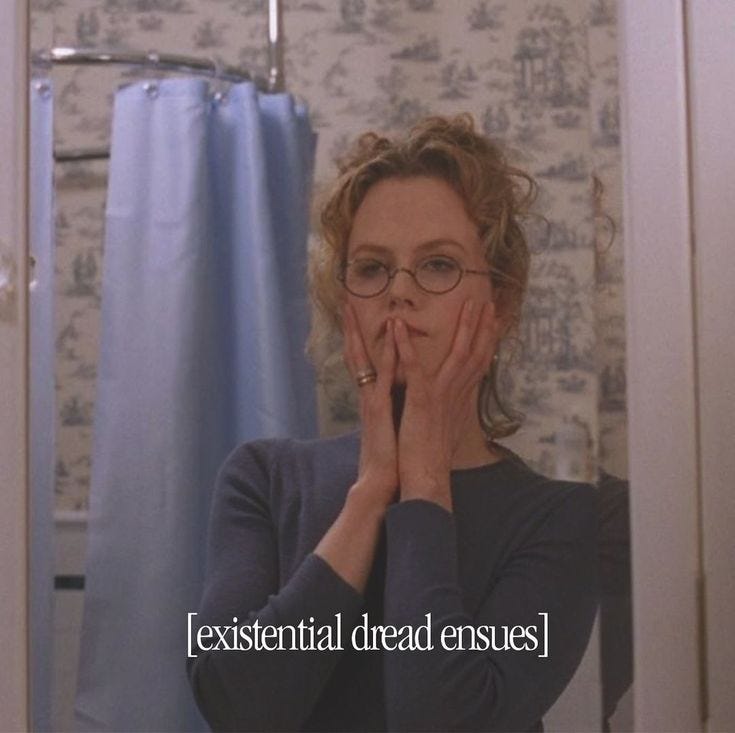
Fashion Is Social Before It Is Individual
Fashion is a synonym for trend. The former is culturally sanctioned. The latter, in the age of ‘Timeless Must-Haves’ Vogue listicles and Fashion Substack (I’m coming for you later), has become a dirty word. Still, Fashion describes the ebb and flow of collective taste. A silhouette, a hemline, a shoe, a way of tucking in your shirt that gains momentum because enough people adopt it.
Fashion is a system. It moves through recognisable stages: it’s invented through market or social norms, endorsed by the fashion elite, adopted by the fashion-conscious, diffused to non-fashionable groups, subjected to obsolescence before being revived at the start of a new cycle. Also known as:
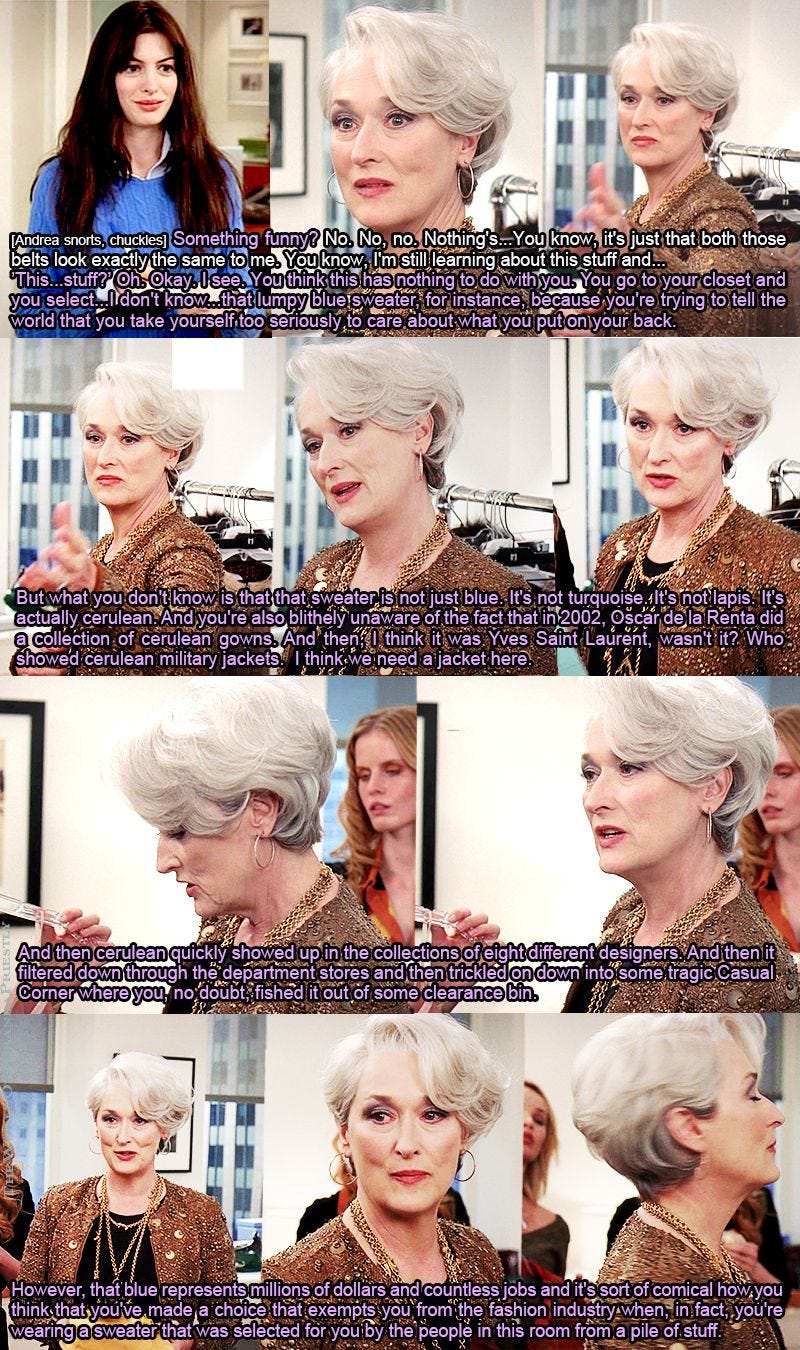
“Ugh?! What do you mean, ‘fashion is invented through market or social norms’? Fashion is art!” But what happens behind the runway is no longer purely a matter of creative vision. Today, commercial teams at the top of fashion houses work with trend forecasting agencies to guide creative design teams (yes, even Matthieu and Jonathan) to ensure that future collections appeal to as many customers as possible. This is how, apart from niche designers like Rick Owens, we end up with fashion looking homogeneous. Fashion has grown dim.
This doesn’t mean that a trend can’t also be emotional. I have connected to trends in ways that have felt introspective. But under that lens, fashion is deeply tied to conformity. Fashion is agreeing: a consensus distilled in physical artefacts. Stores buy into them. Editors platform them. Brands reproduce them. Influential dressers validate them. It is collective before it is individual.
Fashion Runs on Exclusion
It is not just collective. It is organised by hierarchy, money, and exclusion.
Fashion is an industry. More specifically, a Western industry. A system of production, circulation, and aspiration that took shape in Europe and developed alongside an adjacent industry: luxury. Its roots are traced to the court of Louis XIV: until this monarch, there was dress—the clothes we put on our backs mostly for function. He and his court turned clothes into tools of governance and social sorting. Fashion as we know it emerged from a world obsessed with rank, image, access, etiquette, and display. Ah!
‘Prada, Balenciaga, Chanel, Saint Laurent. These designers made fashion that changed the way we are. The way we walk. The way we stand. The way we flirt. […] Then the perversion of marketing killed the fashion industry. […] It has gradually become a network of slaves to financial institutions and a hostage to shareholder interests.
An extract from Li Edelkoort’s anti-fashion manifesto. She is one of the industry’s most respected trend forecasters.
My read on movements like quiet luxury has always been that of a trend built around opacity and social fencing. Adopters don’t shy away from sharing the message: you can’t decode this unless you belong here. When I see the exclusivity created around The Row’s fashion shows, I can’t help but ask: Is the point really the garment or the gap it creates? The social boundary is the real product. And we pay a pretty penny for it.
But the power structure does not stop with the old white men who profit from it. We also enforce the codes on one another. If you want to witness this in real time, spend a week on Fashion Substack:
In the last few days, I came across several Notes and posts from women policing other women’s supposedly wrong interpretation of Carolyn Bessette Kennedy’s style. In the comments, dozens of people seemed convinced they had access to the late fashion publicist’s inner life, assuring us she would never have been on TikTok, posted Instagram Reels, gotten lip fillers, or worn nail extensions had she been alive today. The ugliness of that, during the week of International Women’s Day no less, is hard to ignore. These codes of dress are created for us by men (ouch! I know. But it’s real: the fashion industry is 86% controlled by men, while women drive 80% of its purchases), and we punish one another for reading these codes incorrectly. These posts reflect a broader trend I have observed on Fashion Substack: what began as a space that prided itself on being a refuge for the introverted (I lost count of the Tumblr-to-Substack pipeline Notes) has curdled into this idea that being here confers a higher order of taste and intellectual superiority over women on other platforms.
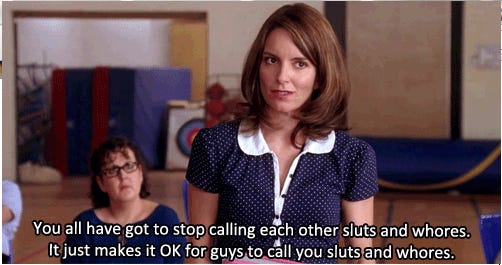
Fashion Sits Uneasily Beside the Idea of Expression
Expression suggests a person moving outward from selfhood. Fashion often moves inward from outside influence. The tagline I chose for this newsletter when I started it (three years ago next month) was ‘A fashion newsletter celebrating individuality.’ I’ve since removed the F word because I want readers to know that, should they wish to, they can leave fashion out of their wardrobe.
Which many stylish people do.
In fact, many industry researchers and academics suggest that style implies some degree of rejection of fashion. You need only look at the most enduring style icons to see it. Patti Smith inspired generations of designers (Ann Demeulemeester built an entire brand from her visual language), and yet Patti Smith herself was never involved in fashion. She was not participating in the cycle. She was getting dressed in a way that reflected her life: her devotion to poetry, books, photography, and coffee, and the industry borrowed from it. Model Lauren Hutton defied the dominant fashion codes of the 1970s: disco, Halston fluid dresses, dramatic prints, platform shoes, sensual silhouettes. Her wardrobe included men’s blazers, straight jeans, khakis, loafers, and minimal makeup. Her style was closer to American prep and sportswear. Grace Jones, too, dressed against mainstream fashion. In the same decade, she embraced severe tailoring, sculptural silhouettes, strong shoulders, and androgyny. Lauren’s style now looks familiar, not far from the capsule wardrobes of our day. Grace’s style, which once seemed alien to the mainstream, went on to shape club fashion, power dressing, and avant-garde editorial styling. These women are examples of style shaping fashion.
My tutor offered a fun frame for this: style icons are the people others can recognise when you dress as them for Halloween. I kept thinking about that in the context of the Carolyn Bessette-Kennedy frenzy. If someone came dressed as CBK, would anyone clock her specifically, or just read the costume as “cool girl from the 1990s”? Dress as Little Edie, Jackie Onassis’ cousin, and the reference is immediate. Everyone who knows her knows who you are meant to be.
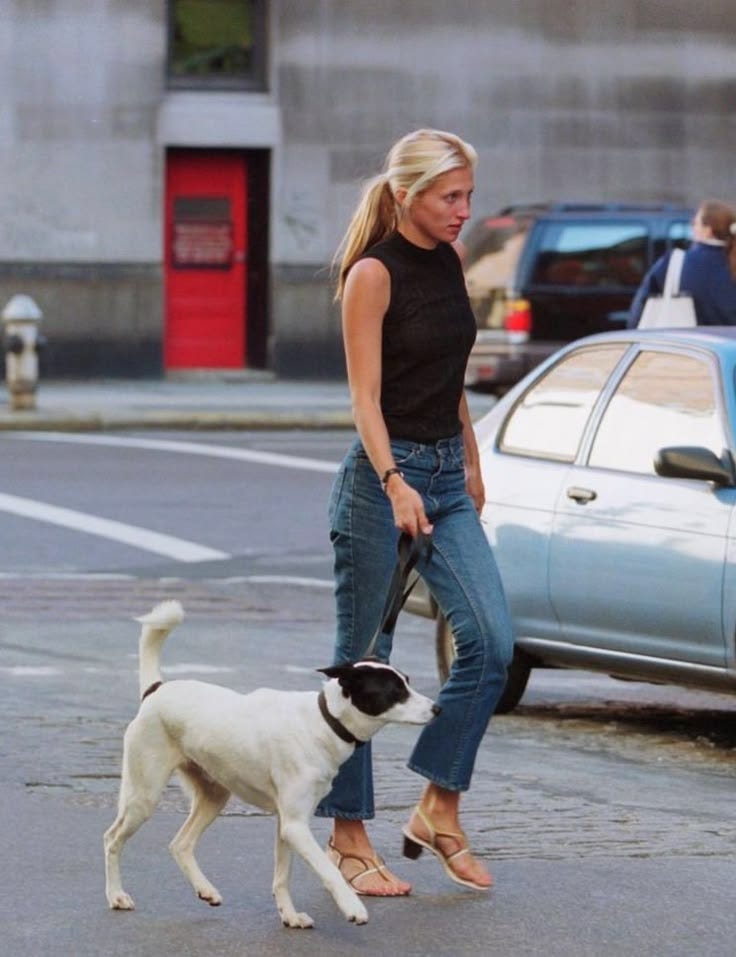
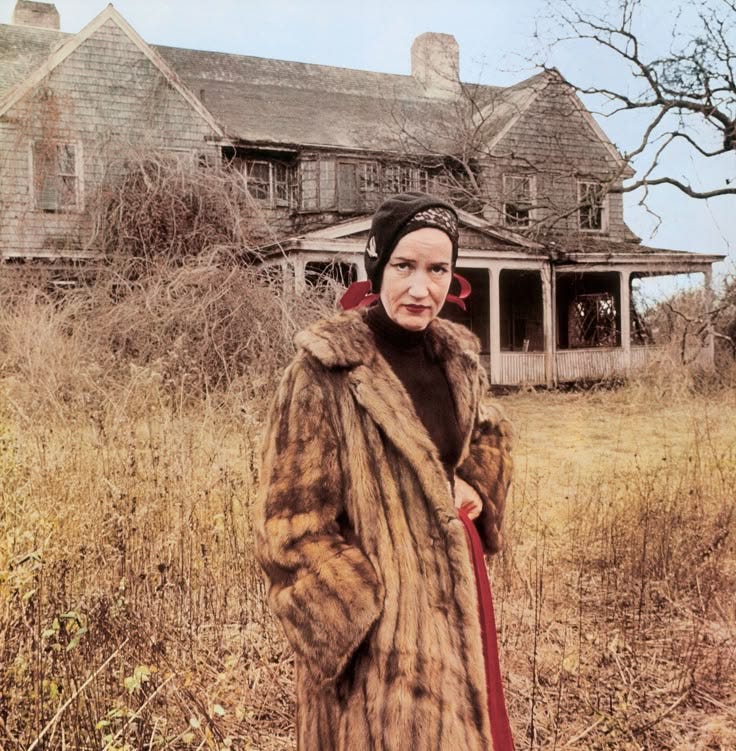
Does that make CBK a fashion icon and Little Edie a style icon? I think it might. Carolyn Bessette-Kennedy has become shorthand for a certain kind of woman, a certain kind of taste, a certain late-1990s cool that can be reproduced and repackaged. Little Edie feels singular. One became a reference point for fashion’s image machine, while the other remains inseparable from the person herself. Fight me in the comments.
Style is a language, a communication system. Which is why it cannot be reduced to formulas. You can borrow silhouettes, proportions, or combinations, but style is a combination of who you are, what you love, what you notice, what you value, and what you reject.
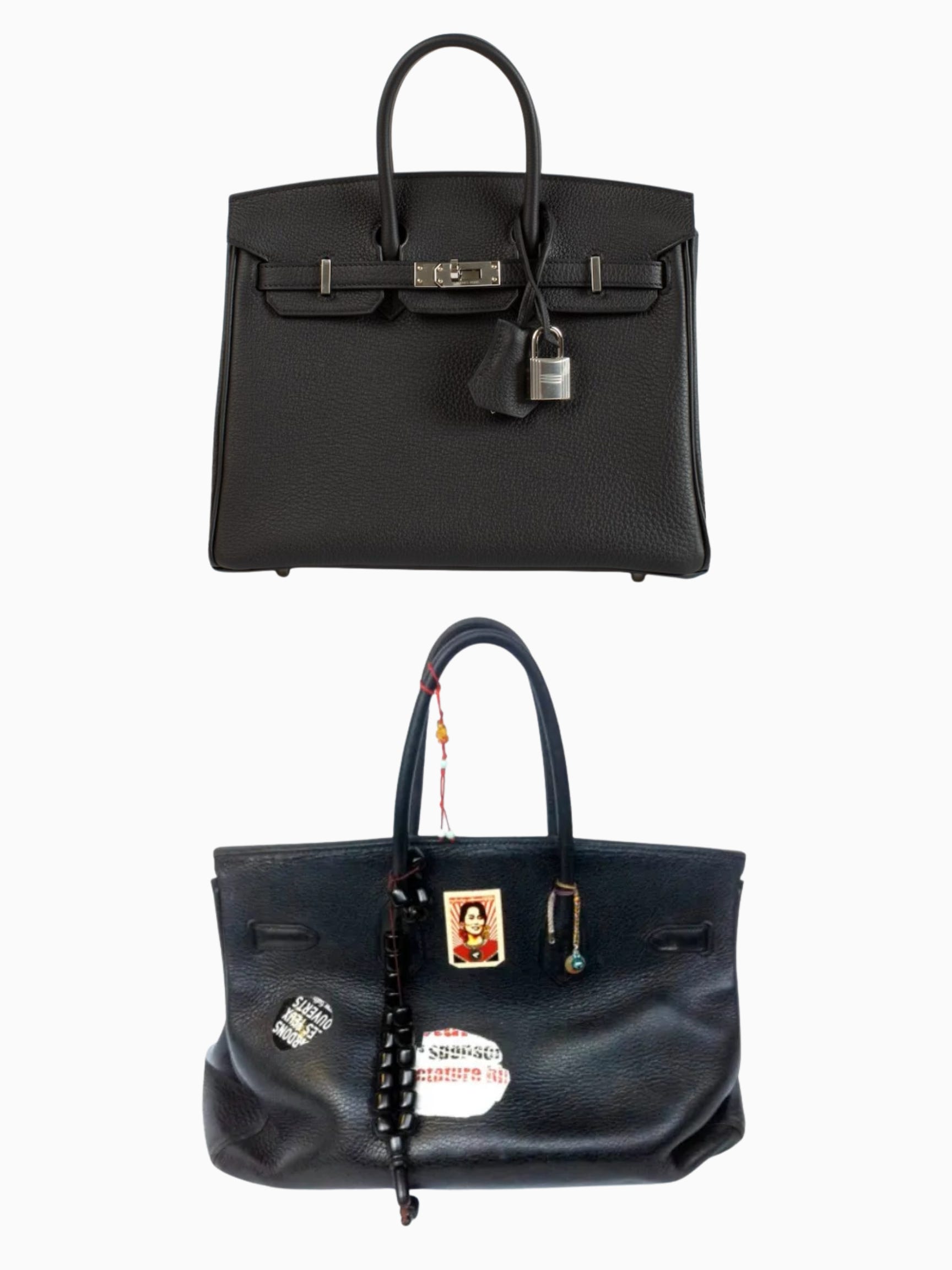
So where does that leave us? Not, for me, in a rejection of fashion: I will always be moved by a beautiful collection and a new silhouette. Fashion still has the power to delight me. But I want to separate it from self-expression. I want to tune into my instincts the way I did during that shopping trip yesterday: What do I need from my clothes today when I feel sluggish and bloated? What helps me recognise myself more clearly? Sometimes the answer will overlap with fashion. Sometimes it will borrow from it. Sometimes it will ignore it entirely.
That is the spirit I want this newsletter to move closer to. It will always offer things to admire, ideas to borrow, ways of thinking through what you wear. But I mainly want the centre of gravity to sit with you, the person getting dressed.
Read More


Thank you so much for reading and supporting Every Body Gets Dressed.
So on point! It makes me think about how recently someone told me that my thrifted jacket was “so trendy” (and they genuinely meant it as a compliment) and my heart sank. So with you in the goal of being stylish, individual, not “fashionable”, and that’s why I love your newsletter!
Thank you for putting the focus on the individual and what works for them rather than relentlessly promoting trends.