Like everyone on the internet, I have been consumed by Hudson Williams and Connor Storrie’s every move since the end of last year. This week, it was Hudson's Wonderland cover shoot that got me: him in a blush pink jacket, matching joggers, eating a banana in front of a pink fridge and a pink coffee machine. Below the pictures are tens of thousands of thirsty comments (half of them mine), and buried beneath the collective swooning, the "bring manly men back" comments from faceless finstas.
These are the same comments that flooded Harry Styles’ December 2020 Vogue cover, where he wore a blue Gucci gown. Before that, the same sentiment chased Mercury in his leotards, Prince in his ruffled shirts and heels, and Bowie in his flamboyant makeup looks. The comments, steeped in misogyny, are also ignorant, for cultures around the world see men wearing dresses and skirts to this day. Pink, to go back to Hudson, was originally a color reserved for men in the court of Louis XIV. As late as the 1920s, trade publications in the US recommended pink for boys as it was seen as the stronger, more decisive color. The same goes for high heels, which were adopted by European aristocratic men in the 1600s to signify status. If social media were around back then, someone would have commented: “How would a woman ever be interested in wearing something as masculine as a high-heeled shoe?”
Once you shatter the idea that men should dress one way and women another, styling possibilities become endless. The Love Story discourse has been inescapable, and watching people tear each other apart over CBK's style has gotten tiresome. The only commentary I came across that genuinely excited me was a Note that read: More girls should dress like JFK Jr. (weird hats) and more guys should dress like CBK (little Yohji). It moves beyond the binary idea of women in suits = empowerment and opens a door to something far more interesting. When I was doing imagery research for this piece, I got frustrated. The search for "masculine feminine aesthetic editorial" returned nothing but images of female models manspreading in a suit and tie, hair slicked back, as if ties, braces, and big boxy blazers are the only things men ever wear, and the only "masculine" reference available to women.
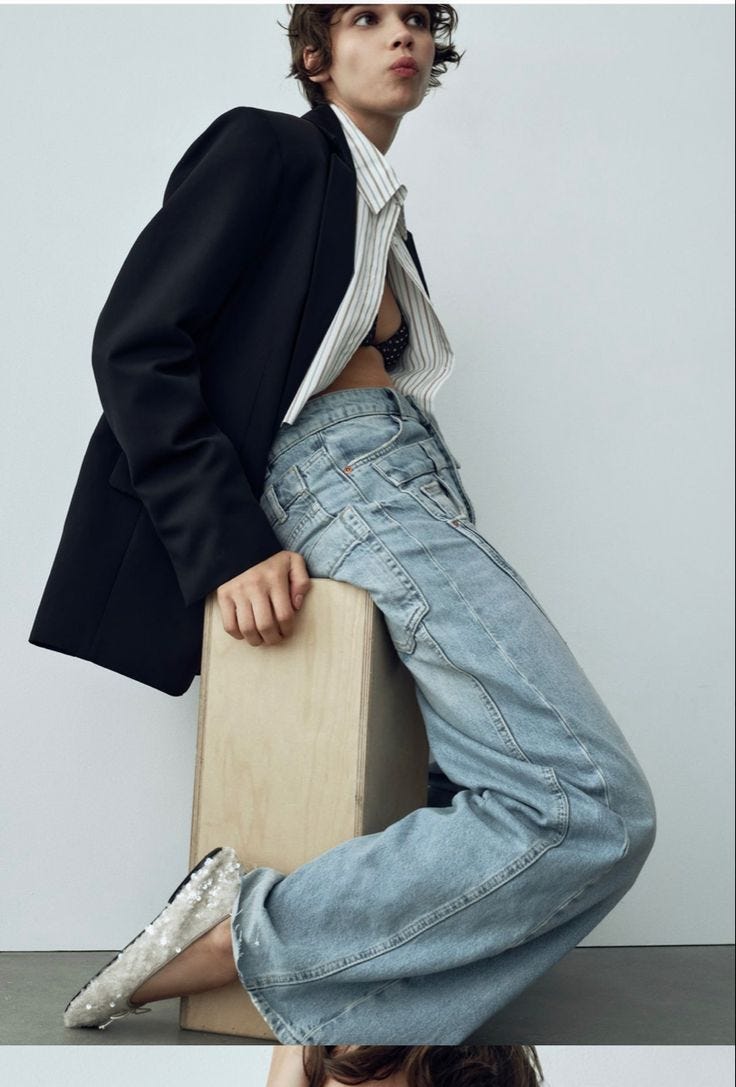
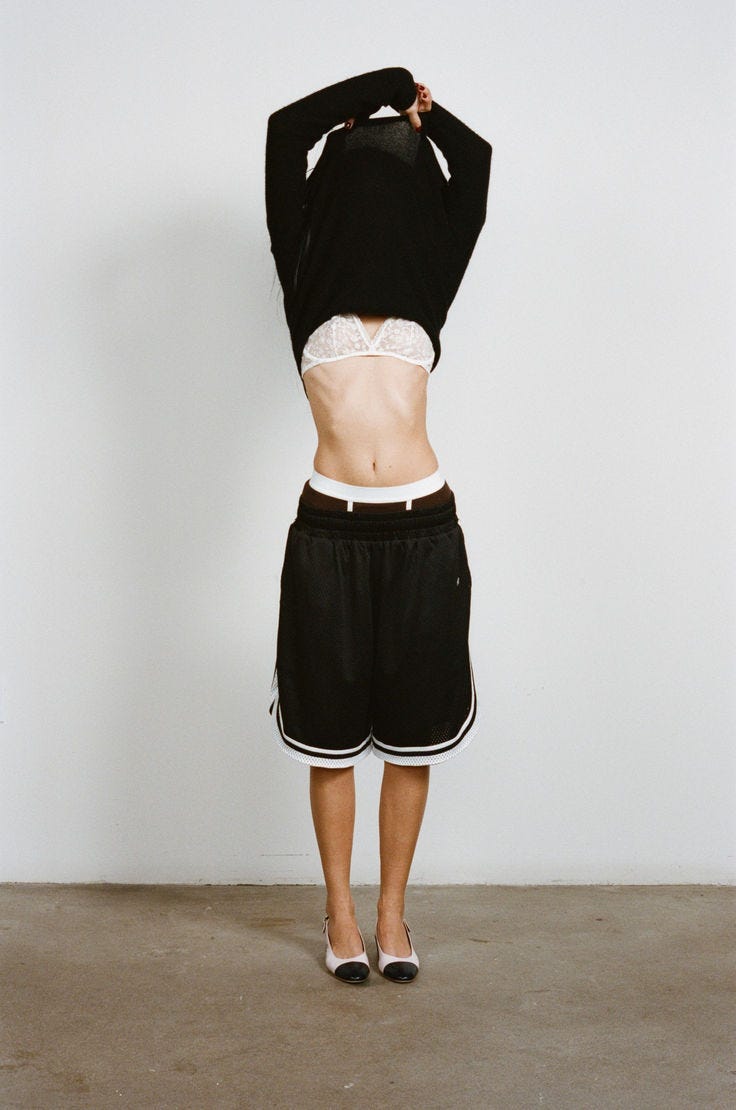
Stylistically speaking, the reason contrast within an outfit looks so good, and by contrast I mean pulling from the so-called masculine and feminine Western wardrobes and wearing them together, is that it creates tension. A silk slip under a heavy blazer, a chunky sports jersey over a lace skirt, a pink satin midi with a beat-up graphic tee. Some of the most compelling styling happens when you mix pieces that were never designed to share an outfit. So let’s give this a crack, shall we?
Note: This email includes over 40 visual references; you’ll want to open it in your browser or in your Substack app.